
Most small brands live in one place: a feed. They post, they wait, and they hope the right person scrolls past at the right moment.
That's renting attention one post at a time. When you stop posting, you disappear.
We'd rather build something that stays put. A presence in the real places your customers walk through every week. We call it brand infrastructure, because like a road or a power line, it keeps working after it's built.
A feed is a crowded room
A feed is crowded and fast. Your post sits between a friend's holiday and a news story, and gets a second of attention if it's lucky. Then the next thing loads.
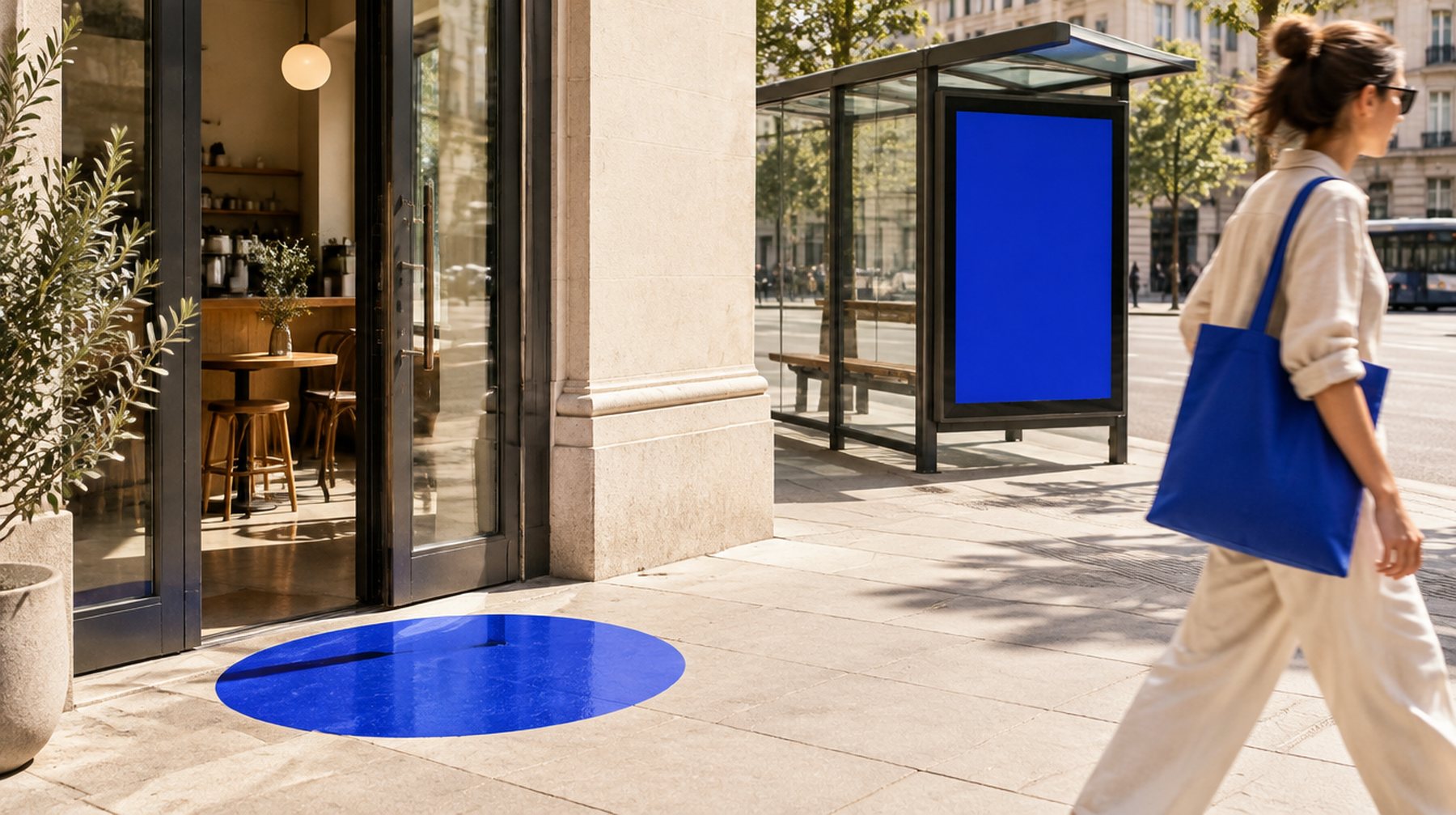
A city is different. People queue for coffee. They wait in the lobby of their building. They stand around at the gym between sets. Those are minutes where nobody is competing for their eyes, and most local brands leave them empty.
For an owner-led business, that's the opening. You don't need to win the internet. You need to be known in the few miles where your customers actually live. A law firm, a clinic or a sneaker studio doesn't get paid by someone three states away. It gets paid by the people who pass the same corners every week.
There's a second difference. A post lasts a day or two. A well-placed sign, decal or partnership sits in the same spot for months. Every week the same people see it again, and that's how being familiar actually happens. Nobody remembers a brand they saw once. They remember the one they walk past every Tuesday.
What does it look like in real life?
Footed By Reesey restores sneakers by hand in Powder Springs and across Metro Atlanta. Her customers care about their shoes, and they're out in the city wearing them.
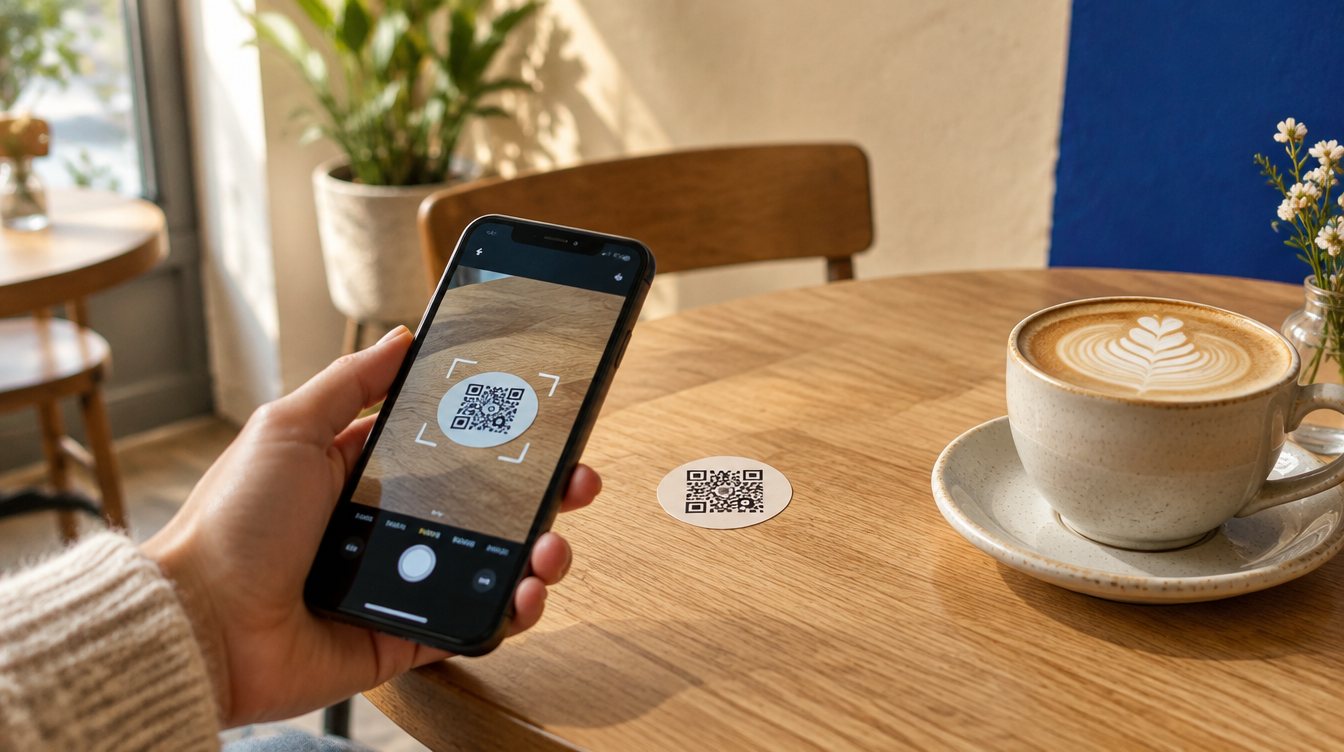
So her brand went where those shoes walk. On a cafe floor, a trail of printed footprints leads to a QR code. People are already looking down while they wait, so the decal meets them exactly where their eyes are. Her name also sits on venue signage, and an apartment community offers her service to residents as an amenity.
None of those placements is a big media buy. Each one is a quiet, permanent reminder that she exists, in a place her customers already are.
How do you decide where your brand should live?
Most owners start with the venue. A cafe they like, a gym with a screen, a building that will take a flyer. That's backwards. The venue is the last decision, not the first.
We use three questions. We call them the Tuesday Test.
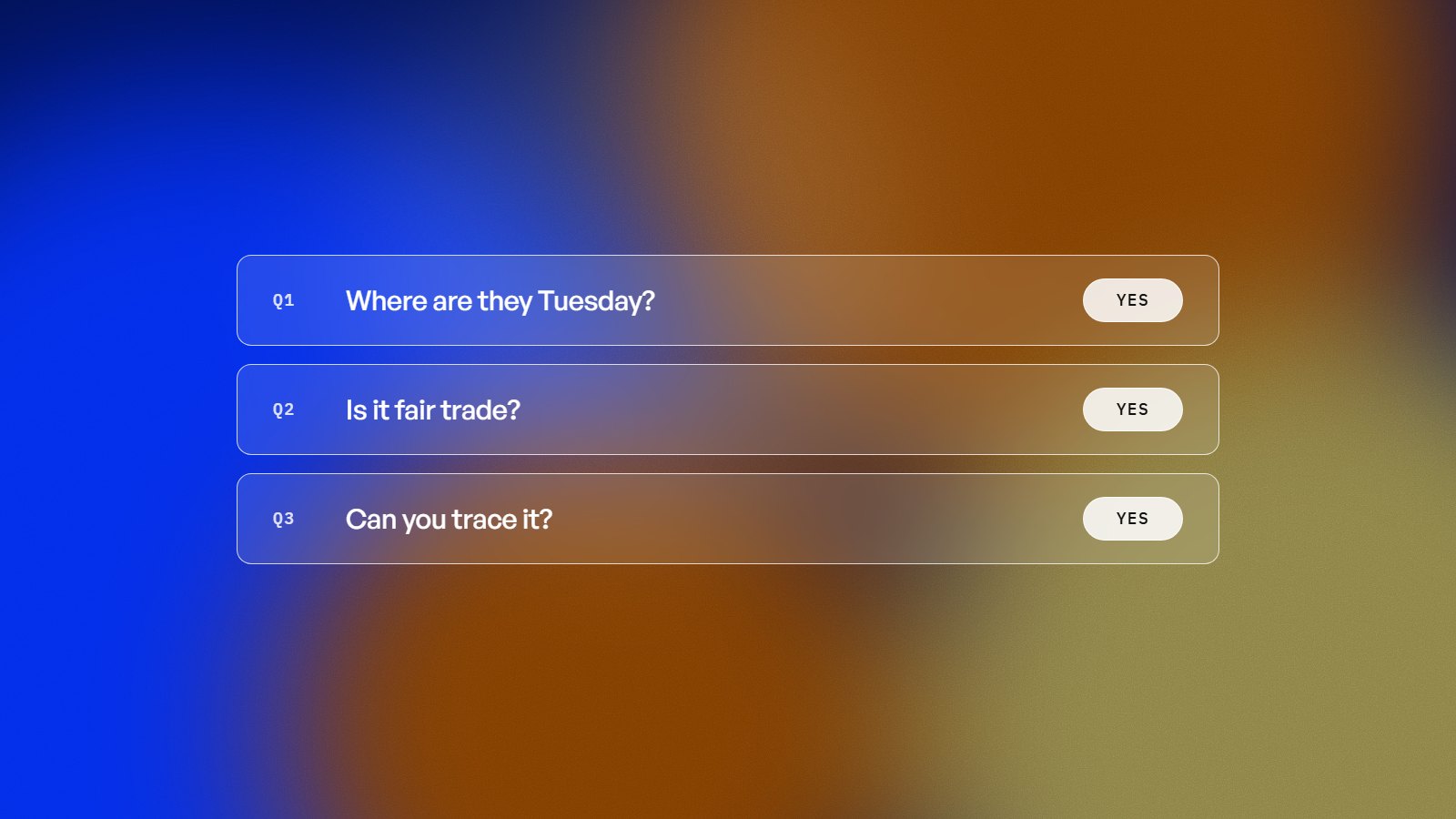
Where are they on a normal Tuesday? Not on launch day or a holiday weekend. On an ordinary weekday, where do your customers spend a spare minute with a phone in hand? A placement only works if the right person is there often and has a moment to look. A busy spot full of the wrong people is just noise.
Is it a fair trade? The placements that last give the venue something its own customers will like. A perk, a reason to come back, a detail that makes the place feel looked after. When both businesses win, the venue protects the placement. When only you win, it's an ad, and ads come down the first time a manager changes.
Can you trace it? If you can't tell whether a placement brought anyone in, you don't know if it's working, however good it looks. Each spot needs its own path, so you can see what it does apart from everything else.
Those three questions rule out most of a city. What's left is usually a short list, and the right first spot isn't always the obvious one.
Where are they on Tuesday, is it a fair trade, and can you trace it? Fail one and it's decoration.
Most offline placements fail after the scan
Here's the part nobody mentions when they show you a clever sticker. Most physical marketing doesn't fail because it's ugly. It fails because nothing was built behind it.
The failures tend to look alike:
- The code goes to a homepage. Someone scans in a cafe and lands on a page written for everyone. The moment is gone.
- Nobody can tell what worked. Five placements, one generic link, and no way to say which venue sent which customer.
- The offer only helps you. The venue gets nothing, so the sign comes down.
- The next step is a DM. The person was ready to book standing at the counter. Then they were asked to message and wait.
Each of these is a Tuesday Test question failing late. A homepage link and a DM ignore the moment the person is actually in. A one-sided offer fails the fair trade. One link for everything fails the trace.
A placement done halfway is worse than none. It costs print and goodwill, and it teaches you that "offline doesn't work" when the real problem was everything after the scan.
What sits behind a placement that works?
A decal on its own is decoration. The work is in the system behind it.
For Reesey, every placement connects to her own QR short link, so each venue can send people somewhere that makes sense for that venue, and the destination can change without reprinting a thing. Those links land on a 23-page site with a four-step booking flow, Stripe deposits, and follow-up emails for anyone who starts a booking and doesn't finish. Behind that sits a Google profile and local search work, because plenty of people who see a name in person look it up later instead of scanning.
That's several moving parts that have to agree with each other. The sign, the link, the page, the offer, the booking, the follow-up, the search result. When one of them is off, the whole chain leaks, and the placement gets the blame.
The trade-offs are real
Brand infrastructure has downsides, and it's worth being plain about them.
It's slower to start than a post. A venue has to say yes, materials have to be made, and the path behind them has to be built first. You won't see a spike the next morning.
It's local by design. If your customers are spread across the country, a cafe floor won't reach them. This works best for businesses whose customers live or work within a short drive.
It needs upkeep. A faded sign or a broken link says more about you than no sign at all. Someone has to check that every placement still lands where it should.
In return, you get something a feed can't give you: a presence that keeps working whether you posted today or not.
Waiting has a cost
The quiet spots in a neighborhood don't stay empty forever. Most cafes will only put one brand on their floor. A building will only offer so many perks. A venue that says yes to someone else this year probably won't say yes to you next year.
Meanwhile, the feed keeps asking for more. Every week you rely on posting alone is a week your brand only exists while you're feeding it.
FAQ
Isn't this just old-fashioned advertising? Partly, and that's the point. The difference is that each placement is tied to its own link and a real reason to act, so you can see what it does.
Do I need a big budget? Not usually. The best placements are partnerships, not paid slots. The real cost is building the path behind them properly.
Does this replace social media? No. It gives people a reason to look you up. When they do, your site and your Google profile need to be ready for them.
Where would your brand live?
If you tell us who your customers are and where they spend their week, we'll run the Tuesday Test with you. We'll tell you the first place we'd put your brand, and what would need to be in place behind it before it goes up. Book a call and we'll walk your city with you.