
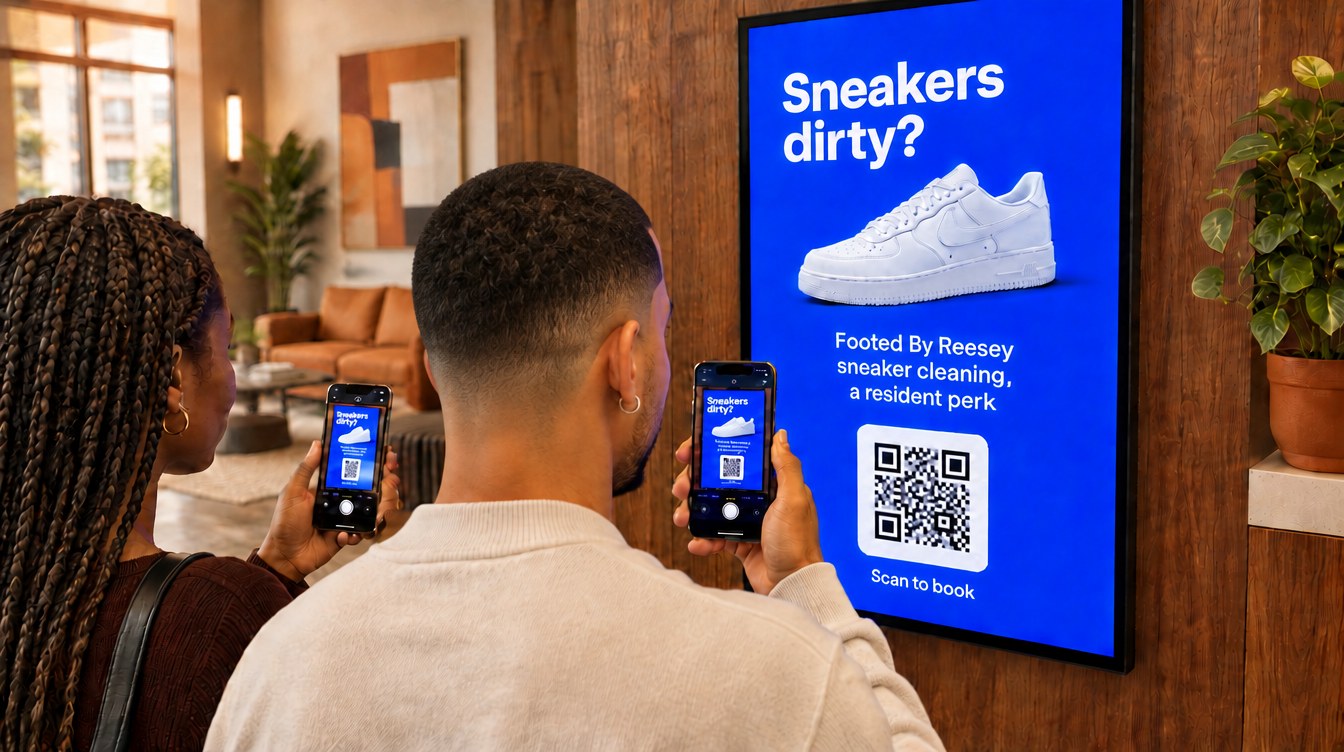
Reesey restores sneakers by hand. She works in Powder Springs and across Metro Atlanta. It's a one-woman studio, and the work is careful, slow and good.
An apartment community now offers her service to its residents as an amenity. Her brand sits where they live, and they can book her from their phone.
We want to explain why that kind of partnership can matter more than any ad a small brand could buy, and why it's harder to pull off than it looks.
Small brands have a trust problem, not a quality problem
A stranger scrolling past a sneaker video has no reason to trust Reesey. They've never met her. They don't know anyone who has. So they keep scrolling, even if the work is beautiful.
An amenity flips that. The property has already said yes to her. When a resident sees her name in their own building, the building is vouching for her. That's trust she didn't have to earn one post at a time.
It also solves distance. She isn't asking people to find her. She's already where they live.
What makes a partnership hold?
A partnership isn't a favor. It's a bargain with three sides, and all three have to come out ahead. We call it the three-way bargain.
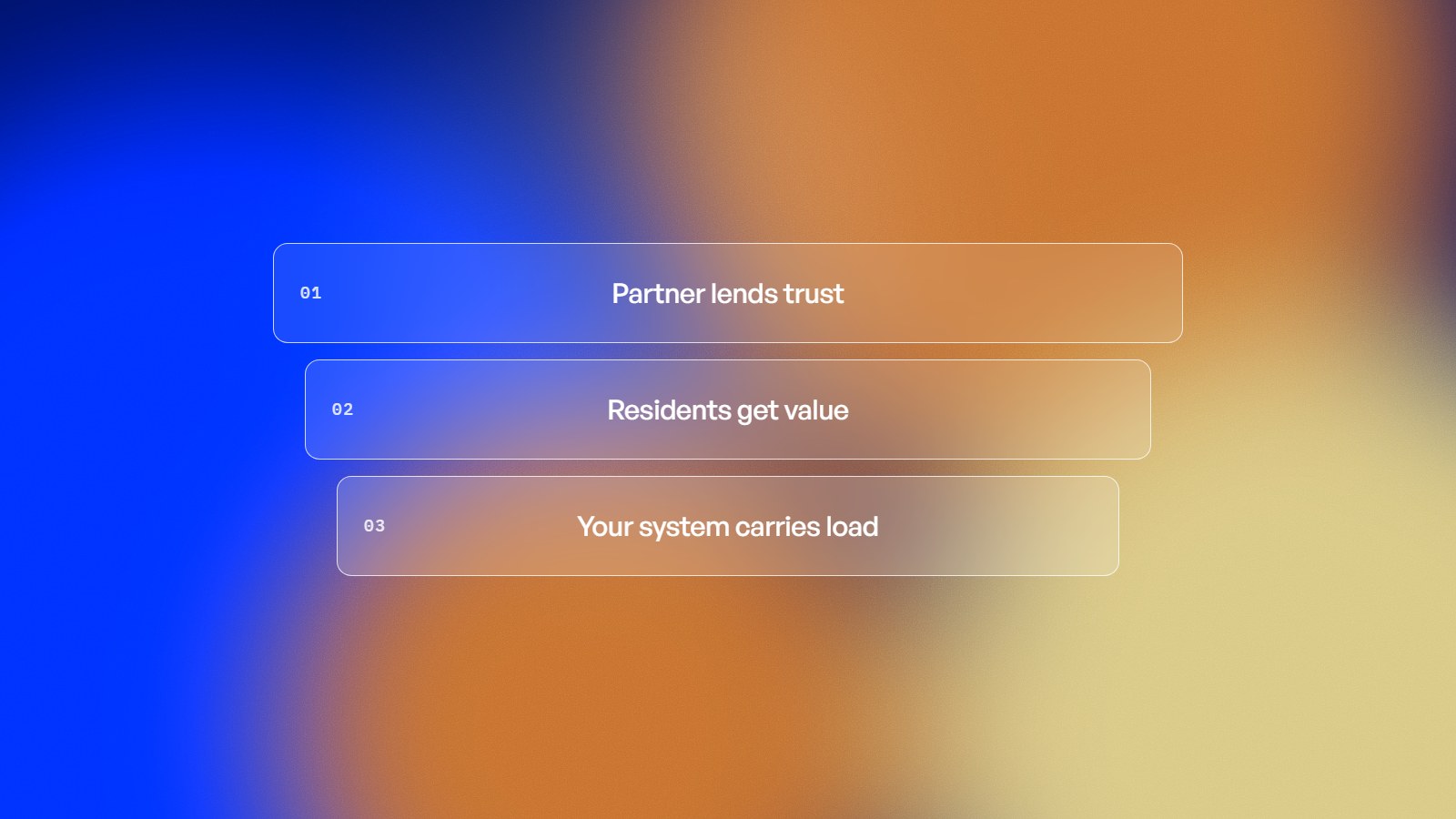
The partner lends trust. The property puts its name next to yours. That's the most valuable thing in the deal, and the easiest to lose. They'll only keep lending it while you make them look good.
Residents get real value. The people on the other end need a reason to use it. Not a discount on something they don't want. Something personal, local and easy, that makes them feel looked after.
Your system carries the load. Every scan, question and booking has to land somewhere that works, at any hour, without you answering by hand. If it doesn't, the two layers above it collapse.
Each layer rests on the one below it. Trust only holds while residents get value. Residents only get value while the system works. That's why the bottom layer gets built first.
An ad asks a stranger to trust you. A partnership lets someone they already trust do the asking.
Why would a property say yes?
This is the part small brands usually miss. You're not asking for a favor. You're offering something the property wants.
Apartment communities compete on more than rent. They compete on how it feels to live there. Pools and gyms are expected now. A perk that's personal, local and a little unusual is something a leasing team can actually talk about on a tour.
A hand-restored sneaker service is exactly that. It's specific. It's local. It gives residents a small reason to feel looked after.
So the conversation isn't "please promote me". It's "here's something your residents will like". Getting that framing right, for that particular property, in language their management cares about, is most of what decides the answer.
The system has to be ready before you ask
This is where partnerships quietly die, and it usually isn't the pitch.
A property is lending you its name. If a resident scans a code and lands on a dead form, or messages and waits two days, the perk becomes a complaint. The property remembers who caused it, and that door rarely opens twice.
So for Reesey, the groundwork came first. A 23-page site with a four-step booking flow, Stripe deposits and invoices. Monthly care plans for regulars. Follow-up emails for anyone who starts a booking and doesn't finish. An assistant that answers by chat and voice, in her personality, at any hour. Her own QR short links, so every scan lands on the right page. Venue signage that looks like it belongs next to a property's own brand.
None of that is glamorous. All of it is what lets a property hand her name to residents without worrying about it. And each piece has to work with the others, on a phone, at eleven at night, for someone who has never heard of her.
What goes wrong when it's done halfway?
Partnerships that fall apart tend to fail in the same few ways.
- The offer is vague. Residents don't understand what they get, so nobody uses it, and the property decides it didn't work.
- The booking can't take the load. A burst of interest arrives and the owner can't keep up by hand.
- Nobody can see the results. The partner asks how it's going and there's no clear answer.
- The materials look homemade. Next to a property's polished branding, a printed flyer reads as a risk.
Map those back to the bargain and the pattern is plain. A vague offer breaks the value layer. A booking that can't keep up breaks the system layer. No results and homemade materials put the partner's trust at risk. Every one of those is fixable before launch. Almost none of them are fixable after.
The trade-offs worth knowing
A partnership isn't right for every business, and it's worth being honest about the costs.
It's slower than an ad. You can buy an ad today. A partnership needs a conversation, a yes, and a system that's ready before launch.
It puts your reputation next to someone else's. That cuts both ways. If the partner has a bad year, you're standing next to them.
And it suits some services better than others. Anything personal, recurring and easy to hand off fits well. A one-time, high-stakes purchase usually doesn't.
Why does this beat ads?
Ads rent attention. When the budget stops, so does the attention.
A partnership builds presence. Her name is in the building whether she posts that day or not. A resident who books and loves the result can tell a neighbor, and that neighbor lives down the hall.
It's also honest marketing. Nobody is tricked into a click. A place people already trust simply says, this person is good, and she's here for you.
Waiting has a cost here, too. A building only offers so many perks. Once a category is taken, the next brand in it is usually turned away.
The exact shape of each arrangement is different, and the details of this one stay between Reesey, the property and us. We're happy to walk through how it works on a call.
FAQ
Do I need a big following to land a partnership? No. You need a service that makes the partner look good and a booking system that won't embarrass them.
What kinds of businesses suit an amenity model? Anything personal, recurring and easy to hand off. Cleaning, care, grooming, repairs, wellness.
Can you build the booking side for me? Yes. That's most of what we built for Reesey before her name went up anywhere.
Thinking about a partner of your own?
If there's a building, a venue or a community that shares your customers, we'd like to hear about it. On a short call we'll run it through the three-way bargain with you, tell you honestly whether a partnership fits, and what would need to be ready before you ask.