
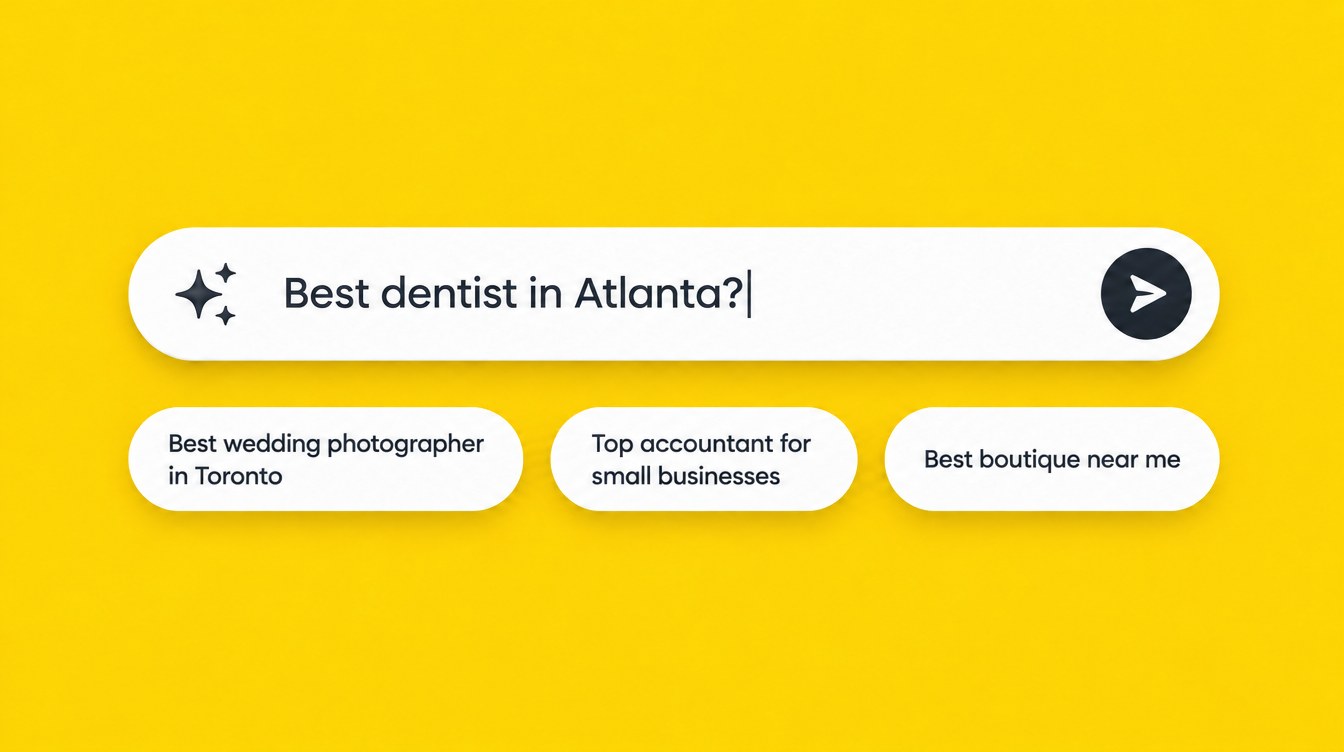
Someone in Decatur opens ChatGPT and types, "Who's the best couples therapist near me with evening hours?"
They don't get ten links. They get a paragraph.
Two practices. Maybe three. A sentence about each.
That paragraph is the whole shortlist. Nobody scrolls to page two, because there isn't one.
For twenty years the goal was simple: get on the first page of Google and you'd get a shot.
That deal is ending.
An AI answer doesn't hand out spots. It picks. And if your business isn't one of the names it picks, you weren't passed over. To that customer, you were never there at all.
It's the same story for the dentist open Saturdays in Smyrna, the accountant in Marietta, the boutique in Inman Park, the wedding photographer, the family law firm and the plumber who answers at 9pm. Same question as always. New place to ask it.
The numbers
- 45% of US consumers now use ChatGPT or other AI tools for local recommendations, according to BrightLocal's
Local Consumer Review Survey 2026. A year earlier it was 6%.
- 8% against 15%. When Pew Research tracked the real browsing of 900 US adults,
people clicked a regular search result on 8% of visits when Google showed an AI summary, and on 15% when it didn't.
- About 1%. That's how often people in the same study clicked a link inside the AI summary itself.
- 58% fewer clicks at number one. Ahrefs looked at 300,000 keywords and found an AI Overview now
correlates with a 58% lower click rate for the top-ranked page.
Ranking first still counts. It just counts for less when an answer sits on top of you.
A list of links gives you a spot. A written answer gives the spot to someone else.
AEO and GEO, in plain English
Two acronyms keep coming up. Here's all you need to know:
- AEO, answer engine optimization: making your pages easy for an AI to lift a clean, correct answer from.
- GEO, generative engine optimization: making your business one of the few an AI chooses to mention when it writes a response from many sources.
For a local business they're one job. The move is from searchable to mentionable: not just showing up when someone looks, but being the name the answer says out loud.
Don't bury SEO
Here's what the hype leaves out. AI tools don't invent answers from thin air. Most of them search the web while they answer, and they lean on the same signals search engines always have.
Google says it plainly in its guide to AI features and your website: there are no extra requirements to appear in AI Overviews or AI Mode, and no special AI files or structured data needed. If a page is indexed and can show a snippet in normal search, it's eligible.
So the basics still carry the weight. The non-negotiables:
- A fast site that works well on a phone.
- One real page per service, written in text, not baked into images.
- A finished Google Business Profile with the right categories, services, hours and real photos.
- Your sitemap submitted to Google Search Console and Bing Webmaster Tools.
A slow site with thin pages loses twice: once in search, and again in the AI answer stacked on top of it. GEO doesn't replace SEO. It's the floor built on top of it.
What it takes to be named by AI
An AI names the businesses it can identify clearly and see confirmed by sources it trusts. Everything below comes back to those two things.
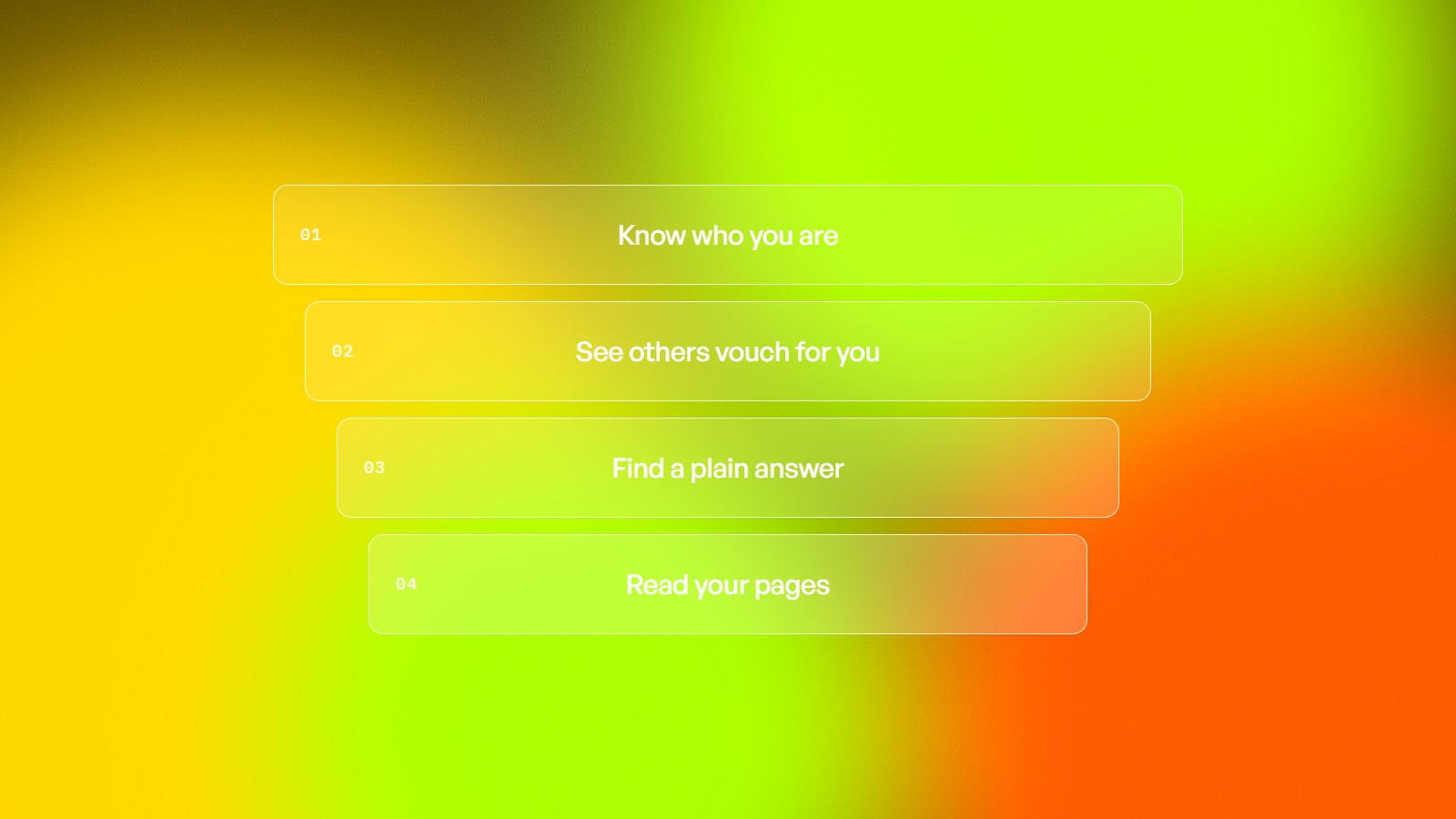
Be one business, everywhere. Same name, same address, same phone, same short description, same list of services. When your website says "Smyrna Family Dental," your Google profile says "Smyrna Family Dentistry LLC" and your Facebook page lists a service you dropped in 2022, the AI can't be sure those are one business. When it's unsure, it names someone it is sure about.
Let other people vouch for you. AI tools repeat what trusted third parties say: your Google reviews, the directories in your industry, local news, professional associations, the "best of" lists people actually read. Five independent sites saying you're good beats your own homepage saying it fifty times.
Answer first. Open every service page with two sentences that say what you do, who it's for and where. Then add the questions customers really ask on the phone, in their words, with straight answers. An AI quotes the top of a page far more easily than the fourth paragraph.
Be specific. "Individual and couples therapy in Smyrna, evening appointments, in person or online, most major insurance accepted" is something an AI can repeat. "Compassionate care you can trust" isn't. A dentist who explains exactly what happens at a first visit gives the answer something to say. A restaurant whose menu is a photo of a PDF gives it nothing.
Get cited where AI already looks. Ask an AI twenty versions of "best wedding photographer in Atlanta" and the same handful of sources keeps coming back: a directory, a local magazine list, a review site, a forum thread. That's the map. A boutique doesn't need to be on every website. It needs to be on the dozen the AI already trusts for "boutiques in Inman Park," described correctly.
Collect reviews that describe results. BrightLocal's same survey found 97% of consumers read reviews for local businesses. "Great service" tells an AI very little. "Fixed our AC on a Sunday in July and walked us through the bill" tells it what you do, when you do it and how it felt. Ask happy customers to mention the job, not just the stars.
Keep your pages current. Old hours, a retired service, last year's team page. An AI repeats what it finds, so stale details become wrong answers. Ask ChatGPT and Perplexity about your business by name every so often and fix whatever comes back wrong.
Build for machines, too. The crawlers have to be allowed in. OpenAI runs several different bots: OAI-SearchBot decides whether your site can appear in ChatGPT's search answers, while GPTBot collects content for training, and you can allow the first and block the second. Perplexity's
PerplexityBot surfaces and links sites in its results. We regularly find small business sites blocking these by accident through a security plugin or an old robots.txt. And verify your site in Bing Webmaster Tools, which now has an
AI Performance report showing how often your pages are cited across Copilot and Bing's AI summaries. It's one of the few free windows into AI citations you can get.
Give it more than text. Real photos of your work, your space and your people, with captions that say what's in them. "Kitchen remodel in Kirkwood" says more than a stock shot ever will. Your Google profile photos, your Instagram and your short videos all add to the picture the web holds of you.
The opportunity
Here's the good news. Most of your competitors haven't started.
A therapy practice, an accounting firm or a neighborhood restaurant usually competes with a dozen local businesses, not thousands. Plenty of them have mismatched listings, vague websites and crawlers blocked without knowing it. The bar is lower than it looks.
And none of this work is wasted. Along the way you build:
- a website that answers real questions in plain words
- listings that match everywhere your customers look
- a steady run of reviews that describe real work
- a place on the local lists and directories people already trust
- a monthly read on what the AI tools actually say about you
Every one of those helps you in Google today, in AI answers today, and in whatever tool your customers pick up next year. Answers shift from one run to the next, so we don't judge by a single screenshot. We ask the same questions every month and watch the pattern.
If you'd like your business to be the name that comes back, book a meeting with us. Bring the question your best customer would ask. We'll talk through where you stand, what the answer needs to see from you, and what we'd build first. We're an Atlanta studio built for small businesses, and we'd love to help yours be the answer.